Edit Content
  • SIGN UP
Lost your password? Please enter your username or email address. You will receive a link to create a new password via email.

The inception of the “International Conference on Climate and Energy Finance” (ICEF) dates back to 2018 and was initiated by Professor Qiang Ji and Professor Zhang Dayong. The primary goal of this conference is to propel research development within the realm of climate and energy finance in China while fostering academic exchanges on both domestic and international fronts. The organizational and coordination responsibilities for the conference rest with the ISETS Energy Finance Network and the Studies of Climate Finance, Chinese Society of Optimization, Overall Planning, and Economical Mathematics. Over the years, ICEF has been successfully hosted in various cities such as Beijing, Kunming, Qingdao, Xiamen, Nanjing, Changsha, and Guangzhou. The conference has consistently attracted the participation of experts and scholars from over 20 countries and regions, representing more than 200 universities. Recognized in the China Association for Science and Technology’s “Important Academic Conference Guide” for five consecutive years, ICEF has played a crucial role in advancing the development of climate and energy finance disciplines and contributing to talent cultivation in China.

For more information, please refer to the conference website: http://www.cnefn.com/icef/icef-2026/, and enquiries can be sent to energyfinance@126.com.

We are pleased to announce that the 2026 International Conference on Climate and Energy Finance (ICEF 2026) will be held by Xidian University between 12-14 June, 2026 in Xi’an City, China, organized by ISETS Energy Finance Committee and Society for the Studies of Climate Finance, Chinese Society of Optimization, Overall Planning and Economical Mathematics. The event is co-organized by Institute of Carbon Neutrality and Climate Finance, Southwestern University of Finance and Economics, Institutes of Science and Development, Chinese Academy of Sciences, School of Economics and Management, Xidian University.


The first ICEF event was held in Beijing (2018) and has become the most important conference in the area of climate and energy finance. It seeks to provide a platform for international scholars to share their original research and join the debates in the frontier topics. Following the success of the past eight events in Beijing (2018), Kunming (2019), Qingdao (2020), Xiamen (2021), Nanjing (2022), Changsha (2023), Weihai (2024) and Guangzhou (2025), we sincerely invite your submissions of high-quality original research to ICEF 2026, to jointly discuss the cutting-edge areas and key issues of climate and energy finance research.

The main theme of ICEF 2026 is Innovation and Adaptation in the Climate Crisis. Papers to be considered include but are not limited to the following list of topics:  

  • Artificial intelligence
  • Big-data analytics in energy finance
  • Carbon finance
  • Climate finance
  • Energy-environment-economy
  • Energy finance and investment
  • Energy market: Modelling and pricing
  • Energy market integration
  • Energy transition management
  • Equitable and just transition
  • Green innovation
  • Household behavior
  • Pathways to carbon neutrality
  • Sustainable development goals
  • Climate risk and financial markets
  • Financing decarbonization of cities
  • Carbon pricing mechanisms and economic impact
  • Challenges in financing climate resilience projects
  • Data-driven modelling in energy and environment
  • Energy-resource-environmental governance
  • ESG information disclosure and performance evaluation
  • Energy saving and emission reduction

Organizers

ISETS Energy Finance Committee

Society for the Studies of Climate Finance, Chinese Society of Optimization, Overall Planning and Economical Mathematics


Host

Xidian University


Co-organizers

Institute of Carbon Neutrality and Climate Finance, Southwestern University of Finance and Economics
School of Economics and Management, Xidian University


Conference chairs

Jian Chai, Xidian University, China

Qiang Ji, Institutes of Science and Development, Chinese Academy of Sciences, China

Dayong Zhang, Southwestern University of Finance and Economics, China


Scientific committee chairs

Xi Lu, Tsinghua University, China

Qunwei Wang, Nanjing University of Aeronautics and Astronautics, China

Yudong Wang, Nanjing University of Science and Technology, China

Yue-Jun Zhang, Hunan University, China


Organizing committee chairs

Yan Song, Xidian University, China

Yan Xia, Institutes of Science and Development, Chinese Academy of Sciences, China


Scientific committee

Bin Chen, Beijing Normal University, China

Ying Fan, Beihang University, China

Qiang Ji, Chinese Academy of Sciences, China

Boqiang Lin, Xiamen University, China

Xunpeng Shi, University of Technology Sydney, Australia

Bin Su, National University of Singapore, Singapore

Shouyang Wang, Chinese Academy of Sciences, China

Zhaohua Wang, Beijing Institute of Technology, China

Jian Yang, University of Colorado, USA

Dayong Zhang, Southwestern University of Finance and Economics, China

Zhongxiang Zhang, Tianjin University, China

Peng Zhou, China University of Petroleum (East China), China

Ali M. Kutan, Southern Illinois University Edwardsville, USA

Aviral Kumar Tiwari, Indian Institute of Management Bodh Gaya, India

Brain Lucey, Trinity College Dublin, Ireland

Duc Khuong Nguyen, Léonard de Vinci Pôle Universitaire, France

Elie Bouri, Lebanese American University, Lebanon

Lutz Kilian, Federal Reserve Bank of Dallas, United States

Muhammad Ali Nasir, University of Leeds, UK

Rangan Gupta, University of Pretoria, South Africa

Ronald D. Ripple, R.D. Ripple & Associates, USA

Samuel A. Vigne, Luiss Business School, Italy

Shunsuke Managi, Kyushu University, Japan

Stéphane Goutte, University Paris-Saclay, France

Ugur Soytas, Technical University of Denmark, Denmark


Organizing committee

Yingtong Chen, China University of Petroleum (East China), China

Kun Guo, University of Chinese Academy of Sciences, China

Zhaoyuan Hu, Xidian University, China

Ruining Jia, Xidian University, China

Ting Liang, Xidian University, China

Yinpeng Liu, Beihang University, China

Huiting Shi, Xidian University, China

Xiaolei Sun, Beihang University, China

Aiqin Wang, Xidian University, China

Lei Wang, Xidian University, China

Limin Xing, Xidian University, China

Ying Yang, Xidian University, China

Shunxin Ye, Xidian University, China

Chengyuan Zhang, Xidian University, China

Keynote Speakers

Robert Engle

Stern School of Business, New York University

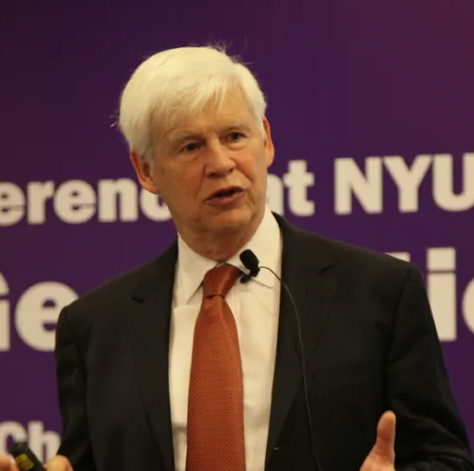
Professor Robert Engle is the laureate of the 2003 Nobel Memorial Prize in Economic Sciences. His pioneering ARCH model has made interdisciplinary contributions across economics, finance, and statistics. He has participated in the 32nd and 35th Annual AFBC, serves as the founder of the Volatility and Risk Institute at NYU Stern and Co-Director of the Volatility Institute at NYU Shanghai, and is also Co-Founding President of the Society for Financial Econometrics (SoFiE) at New York University. His ARCH framework has become an indispensable tool for scholars and financial market analysts in asset pricing and portfolio risk assessment.

Geoffrey Wood

Western University, Canada

Professor Geoffrey Wood is Professor and DanCap Endowed Chair in Private Equity, and Department Chair DAN Management at Western University in Canada. Previously, he served as Dean and Professor of International Business, at Essex Business School and before then as Professor of International Business at Warwick Business School, UK. He has authored/co-authored/edited eighteen books, and over two hundred and fifty articles in peer-reviewed journals. Geoff's research interests centre on the relationship between institutional setting, corporate governance, firm finance, and firm level work and employment relations. He is a Fellow of the Academy of Social Sciences, and a Fellow of the British Academy of Management, and a senior fellow of the Euromed Academy, and is also in receipt of an Honorary Doctorate in economics from Aristotle University, Greece. Geoffrey Wood is Editor in Chief of Human Resource Management Journal. He also edits the Chartered ABS Journal Guide ranking list. Previously he has served as Editor in Chief of the British Journal of Management (official journal of the British Academy of Management, of the Annals of Corporate Governance (official journal of the ICGS), and of the Academy of Management Perspectives (official journal of the Academy of Management).

Kuishuang Feng

University of Hong Kong, China

Dr. Kuishuang Feng is a Professor in the Department of Geography at the University of Hong Kong. Prior to this appointment, he held positions as Tenured Associate Professor, Research Professor and the Chair of Research Faculty at the University of Maryland College Park after his PhD study at University of Leeds, UK. He is currently leading a Sustainability Research group specializing in socio-economic and environmental accounting at different spatial scales (local, national, and global), with focuses on sustainable consumption and production, climate change mitigation, low carbon transition, sustainable natural resource management, and environmental justice. Prof. Feng’s research prominently features methodological and modeling development and applications, including Environmentally Extended Input-Output models and extensions (EEIO), Life-Cycle Analysis (LCA), and Integrated Assessment Models (e.g. Global Change Analysis Model - GCAM). He is lead/co-author of more than 200 journal articles with significant contributions to top-tier journals of his discipline, including more than 40 publications in Nature, Science and Cell Press journals and PNAS. His research has been supported by different funding sources, such as the Inter-American Development Bank, the Energy Foundation, the National Natural Science Foundation of China to just name a few. Prof. Feng actively contributes to his field's community through leadership roles. He is currently the President of the International Input-Output Association (IIOA) and Editor-in-Chief of the Journal Sustainable Production and Consumption. As a well-recognized researcher in the field of Climate Change Mitigation, he contributed to the IPCC Sixth Assessment Report. He also serves on the editorial boards of several other journals, including Ecological Economics and Geography and Sustainability. He was named as a Highly Cited Researcher by Clarivate from 2019 to 2025.

Libo Wu

Fudan University, China

Professor Libo Wu currently serves as Assistant President of Fudan University and Dean of the Shanghai Institute for Energy and Carbon Neutrality Strategy. She is a recipient of the National Science Fund for Distinguished Young Scholars and a Young Chang Jiang Scholar of the Ministry of Education, and also acted as a Lead Author for Working Group III of the Sixth Assessment Report of the Intergovernmental Panel on Climate Change (IPCC). She has published more than 70 academic papers in prestigious journals at home and abroad, including PNAS, Nature Sustainability, Nature Climate Change, Energy Economics, Economic Letters, China Economic Review, Social Sciences in China and Economic Research Journal, and authored four academic monographs. In addition, she has presided over more than 30 national and ministerial-level research projects, such as major projects of the National Social Science Fund, the National High Technology Research and Development Program of China (863 Program), key research and development projects of the Ministry of Science and Technology, the National Science and Technology Support Program during the 12th Five-Year Plan Period, and major projects of the Key Research Bases of Humanities and Social Sciences under the Ministry of Education.

Submission process 

An extended abstract is needed and we encourage authors to submit full papers. Please go to the conference website: http://www.cnefn.com/icef/icef-2026/ and use the online submission portal to submit your paper.

Publication opportunities

Papers submitted to the conference have the opportunity to publish in one of the special issues. Qualified papers will be invited to submit to the suitable journal based on recommendations by the guest editors. Please note that the recommendation does not guarantee final publication, all regular requirements and reviewing process set by journals have to be satisfied. 

List of special issue journals

  • Advances in Climate Change Research(SCIE, Q1)
  • Journal of Climate Finance
  • 气候变化研究进展

Important Dates

  • Abstract submission deadline: April 10, 2026 
  • Notification of acceptance: April 20, 2026
  • Full paper submission deadline (for special issues): May 10, 2026
  • Registration deadline: May 20, 2026
  • Conference: June 12-14, 2026 (Registration: June 12)
Conference Venue

Shaanxi Guest House

Address: No. 1 Zhangba North Road, Yanta District, Xi’an, Shaanxi, China 710075

City Information

Location

Xi’an, the capital of Shaanxi Province, is a major city in Northwest China. It is situated on the Guanzhong Plain, with the Wei River to the north and the Qinling Mountains to the south. As the eastern terminus of the ancient Silk Road, Xi’an serves as a key cultural, economic, and transportation hub, linking the western and central regions of the country.

Climate and Environment

Xi’an experiences a warm temperate semi-humid continental monsoon climate, characterized by hot, rainy summers and cold, dry winters. Summer temperatures typically range from 24°C to 28°C (75.2°F to 82.4°F), while winter temperatures often fall between 0°C and 8°C (32°F to 46.4°F). The city receives an average annual rainfall of approximately 600 millimeters (24 inches), with the majority of precipitation concentrated in September.

The urban environment of Xi’an blends historical heritage with modern city life. The well-preserved ancient city wall defines the historic core, while the metropolitan area extends with contemporary developments. Xi’an has numerous public parks and green spaces, many of which are integrated with historical sites, providing residents and visitors with natural areas within the urban landscape.

The enjoyable environmental and climatic conditions of Xi’an

History and Culture

Historical buildings in Xi’an

Xi’an stands as one of China’s most historically significant cities with over 3,100 years of history. Founded during the Western Zhou Dynasty, it served as capital for 13 dynasties including the influential Qin, Han, and Tang periods. The city gained global importance as the eastern terminus of the ancient Silk Road, connecting China with Central Asia and Europe.

Culturally, Xi’an preserves remarkable heritage including the Terracotta Army and the well-preserved City Wall. The city is celebrated for its distinctive cuisine featuring Roujiamo and various noodle dishes, along with traditional arts like Qin opera. Xi’an’s architecture presents a blend of ancient monuments and modern structures, reflecting its continuous historical evolution.

Economy

As of recent estimates, Xi’an has a population of approximately 13 million people, making it one of China’s major urban centers. The population is diverse, comprising a mix of local residents and migrants from other parts of China, reflecting the city’s status as a key economic hub in Northwest China.

In terms of economic performance, Xi’an boasts a strong Gross Domestic Product (GDP). As of the latest figures, the city’s GDP reaches approximately 1.33 trillion RMB (approximately 182 billion USD). The city’s economy benefits from its thriving manufacturing sector, particularly in high-technology industries such as semiconductor and aviation manufacturing, along with growing service industries. Xi’an continues to experience steady economic growth, driven by its strategic location, robust industrial base, and dynamic business environment.

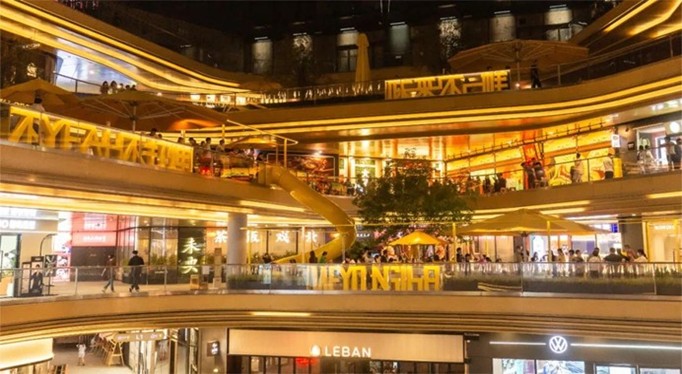
Booming night economy in Xi’an

Science Research & Education

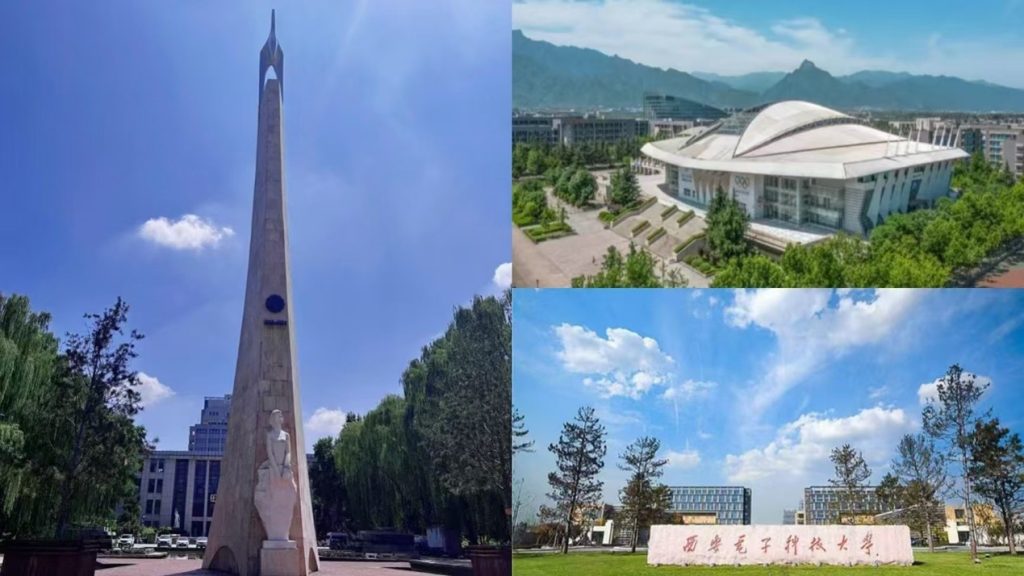
Xi’an serves as a major hub for scientific research and higher education in Western China. The city hosts several leading universities and research institutions, including Xi’an Jiaotong University, Northwestern Polytechnical University, Xidian University, and the Xi’an Institute of Optics and Precision Mechanics under the Chinese Academy of Sciences. These institutions conduct cutting-edge research in fields such as aerospace engineering, electronic information technology, photonics, and materials science. Additionally, Xi’an High-tech Industries Development Zone provides an important platform for technological innovation in semiconductor manufacturing and artificial intelligence.

Leading Universities in Xi’an

Tourist Attractions & Culinary Specialties

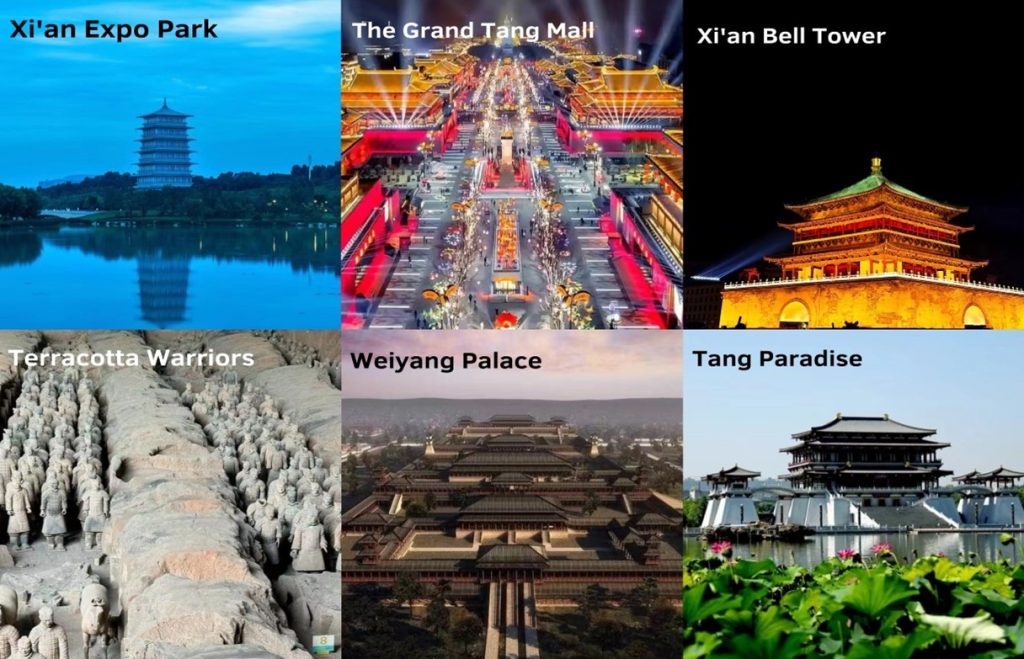
Xi’an, a renowned historical city in Northwest China, boasts abundant cultural landmarks and distinctive cuisine. Its most renowned heritage sites include the Terracotta Army, a world-famous archaeological discovery; the well-preserved Ancient City Wall, one of the largest and most complete medieval military defense systems in the world; and the Big Wild Goose Pagoda, a landmark Buddhist building in the Tang Dynasty. The Bell Tower and Shaanxi History Museum further enrich the cultural experience. Visitors can enjoy Xi’an’s unique culinary traditions, including Roujiamo, known as the Chinese hamburger; Biangbiang noodles, characterized by their broad shape; and Yangrou Paomo, a mutton stew with crumbled flatbread. These attractions and specialties make Xi’an a compelling destination for travelers seeking both cultural enrichment and culinary discovery.

Must-see Xi’an Sights

Registration fee

International participant:

Regular participant: $400

Student: $260

Chinese participant:

Regular participant: 2600 RMB

Student: 1600 RMB

(1) REGISTRATION FEES are payable in advance, no onsite registration is allowed.

(2) To include the paper in the conference program and the conference proceedings, at least one of the authors has to register before the registration deadline. If multiple submissions are accepted, then a different author will be required to pay the registration fee and present each paper. Otherwise, authors will be contacted and asked to drop one or more paper(s) for presentation.

(3) Full time student (not including post doctor) MUST provide proof of full time status (copy of valid student ID card or letter from affiliated institution head or program director).

1. Foreign participants:

(1) Payment by Bank Transfer

1. Foreign participants:

(1) Payment by Bank Transfer

Bank: National Australia Bank

BSB (bank, state, branch): 082-356

BIC/SWIFT code: NATAAU3303M

Account number: 406628981

Beneficiary name and address: International Society for Energy Transition Studies, 5 Barraba Place, Bella Vista, NSW 2153, Australia 

or (2) Online payment by paypal at: 

https://paypal.me/AusEnergyTranInst?locale.x=en_AU

Please quote the attendee name+EnergyFinance as the Remittance Information when make payment.

Please Login in the system by your account and fill in the registration form and upload the photographed or scanned copy of the remittance.


2. 国内参会者(国内参会者请务必通过以下账号汇款)

支付方式1:二维码支付(推荐)

支付方式2:银行转账

Scroll to Top